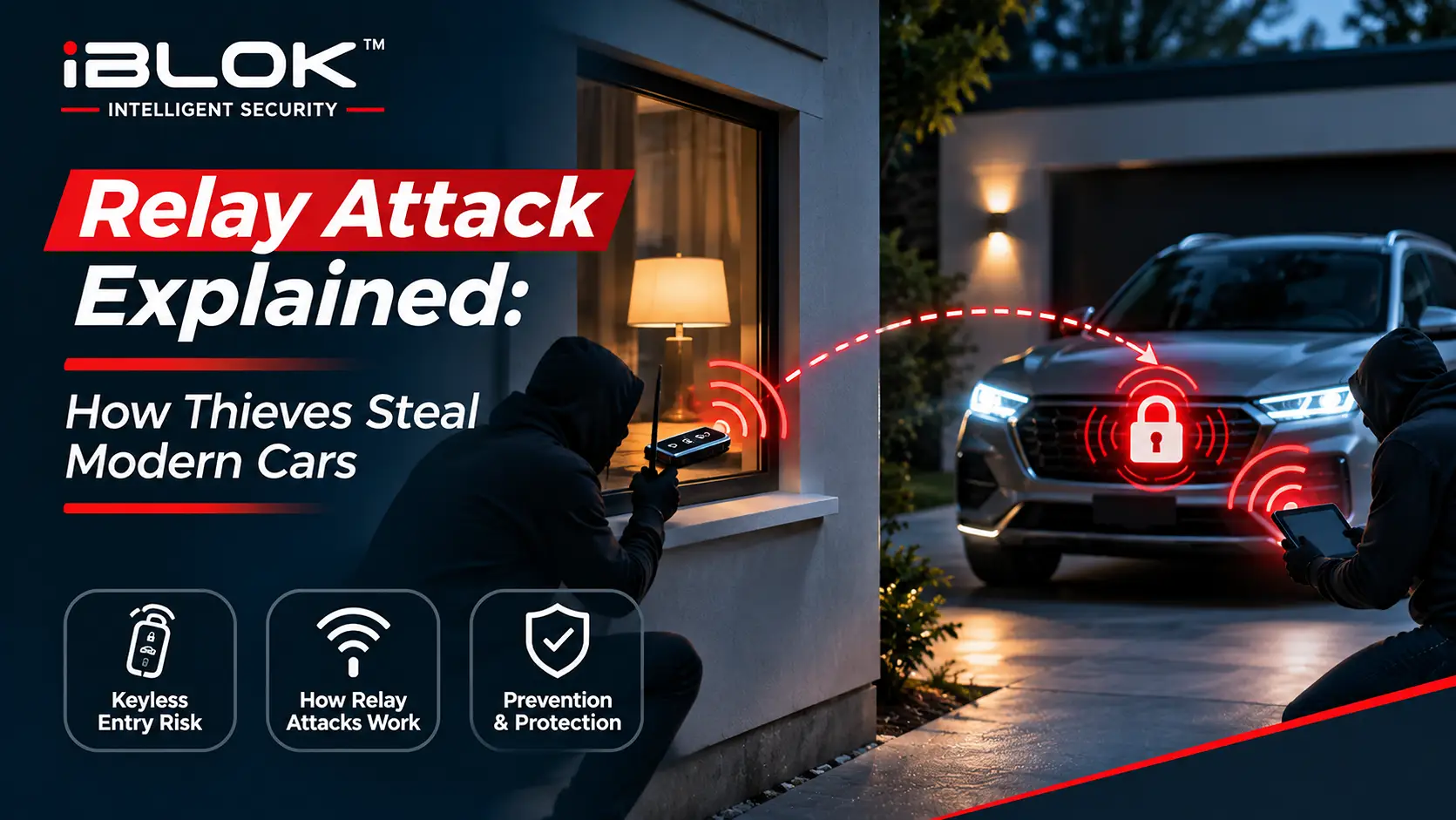
Modern cars are designed with advanced technology to make driving more convenient. Keyless entry, push-button start and smart key systems allow drivers to unlock and start their vehicles without taking their keys out of their pockets.
However, these convenient features can also introduce new security risks.
One of the most concerning techniques used by vehicle thieves is known as a relay attack. This method allows criminals to unlock and potentially start certain keyless vehicles without having physical access to the original car key.
Unlike traditional vehicle theft, relay attacks do not necessarily involve breaking windows, damaging locks or forcing the ignition.
For vehicle owners in South Africa, understanding how relay attacks work and how to prevent them is an important step towards improving vehicle security.
In this guide, we explain what a relay attack is, how thieves exploit keyless entry systems, which vehicles may be affected and what you can do to protect your vehicle.
A relay attack is a type of electronic vehicle theft that targets cars equipped with passive keyless entry and start systems.
These systems allow a vehicle to recognise an authorised smart key when it is within a certain distance. When the key is detected, the vehicle may automatically unlock its doors or allow the engine to start.
Criminals exploit this communication by using specialised electronic equipment to relay signals between the vehicle and its genuine key fob.
Essentially, the vehicle is tricked into believing that the authorised key is nearby, even when it is actually inside the owner's home or somewhere else nearby.
This technique can allow thieves to gain access to a vehicle without stealing or physically handling the original key.
Relay attacks generally involve two criminals working together, although the exact equipment and techniques can vary.
Here is a simplified explanation of how the process works:
Criminals identify a vehicle equipped with passive keyless entry and start technology.
These vehicles can detect an authorised key fob without requiring the driver to press an unlock button.
One criminal attempts to detect communication from the vehicle owner's smart key, which may be inside a nearby house.
Specialised equipment forwards the communication between the key and the vehicle, making the vehicle believe that its authorised key is nearby.
Once the vehicle accepts the relayed communication, its doors may unlock and the ignition may become available.
If the vehicle accepts the relayed key authentication for starting, the criminals may be able to drive away without possessing the original key.
The entire process can be surprisingly quick and may leave little visible evidence of forced entry.
Modern vehicles use sophisticated electronic systems to improve convenience and safety. However, keyless entry technology introduces a communication dependency between the vehicle and its smart key.
Some of the factors that contribute to relay attack risks include:
Vehicles with passive keyless entry automatically detect an authorised key when it is within range.
This eliminates the need to manually unlock the vehicle, but it also creates an opportunity for criminals to exploit wireless communication.
Many modern vehicles use push-button ignition systems that allow the engine to start once the vehicle recognises an authorised key.
If a relay attack successfully convinces the vehicle that the key is present, the vehicle may allow the engine to start.
Smart keys communicate wirelessly with vehicle security systems.
Although modern systems use security protocols and authentication mechanisms, relay attacks exploit the communication distance rather than necessarily breaking the encryption itself.
Many drivers assume that factory-installed immobilisers and keyless entry systems provide complete protection against every type of vehicle theft.
However, no single security technology should be considered completely foolproof.
Adding independent security measures can provide another layer of protection.
Relay attacks primarily target vehicles equipped with passive keyless entry and start systems.
These features are commonly found in modern:
However, not every vehicle with remote central locking is vulnerable to relay attacks.
There is an important difference between conventional remote locking and passive keyless entry.
With conventional remote locking, drivers must physically press a button on the key fob to unlock the vehicle.
With passive keyless entry, the vehicle can detect the key automatically when it is nearby.
The actual level of vulnerability depends on the vehicle manufacturer, model, year and security technology.
Relay attacks are not the only electronic techniques used by modern vehicle thieves.
Understanding the differences can help you choose the right security solution.
Theft TechniqueHow It WorksMain TargetRelay AttackRelays communication between a smart key and vehicleKeyless entry systemsKey CloningDuplicates or compromises vehicle key credentialsVehicle key authenticationSignal JammingDisrupts wireless locking communicationRemote locking systemsCAN Bus AttackExploits vulnerabilities in vehicle communication networksVehicle electronic systemsECU ManipulationAttempts to compromise or replace electronic control unitsEngine management and vehicle control
Each technique targets a different part of a vehicle's security architecture.
This is why vehicle owners should consider multiple layers of protection instead of depending entirely on one factory-fitted security feature.
To understand these threats in more detail, read our related guide: Can Thieves Bypass Factory-Fitted Car Security?.
Although relay attacks can be concerning, there are several practical steps vehicle owners can take to reduce their risk.
A Faraday pouch is designed to block radio-frequency signals from reaching or leaving the key fob.
Keeping your smart key inside a properly tested signal-blocking pouch can help prevent criminals from detecting and relaying its wireless communication.
Remember to protect spare keys as well.
Avoid leaving your vehicle keys near entrance doors, windows or external walls.
Keeping them in a secure location away from the vehicle can reduce opportunities for criminals to detect their signals.
Some vehicle manufacturers provide an option to disable passive keyless entry or switch off the smart key when it is not being used.
Check your vehicle owner's manual or speak with an authorised dealer to determine whether this feature is available.
An independent aftermarket immobiliser can provide another layer of vehicle security.
For example, a PIN-code-based immobiliser requires the driver to complete an additional authentication step before the vehicle can be driven.
This can help protect against certain theft methods even if criminals manage to bypass the original keyless entry system.
Steering wheel locks and other physical anti-theft devices provide an additional deterrent.
They may not stop every theft attempt, but they can make unauthorised vehicle use more difficult.
GPS tracking systems can help monitor vehicle location and support recovery efforts if a vehicle is stolen.
However, tracking is primarily a monitoring and recovery solution rather than a replacement for an immobiliser.
Whenever possible, park inside a locked garage or a secure parking area.
Install adequate outdoor lighting and consider CCTV monitoring around your parking space.
Combining these precautions with electronic security can improve your overall vehicle protection.
An additional immobiliser can provide an important security layer against certain vehicle theft techniques, including situations where criminals have successfully compromised the original keyless entry process.
However, the effectiveness depends on how the immobiliser authenticates the driver and how it integrates with the vehicle.
A PIN-code-based immobiliser introduces an additional authorisation requirement before the vehicle can be driven.
This means that successfully unlocking a vehicle does not automatically mean that an unauthorised person can operate it.
For this reason, independent immobilisation technology is worth considering alongside traditional factory-fitted security.
When it comes to protecting modern vehicles against electronic theft techniques, adding another layer of security can make a meaningful difference.
iBLOK offers an advanced CAN Bus immobiliser designed to provide additional protection through PIN-code authentication.
Unlike conventional systems that depend on wireless remotes or smartphone applications, iBLOK uses a unique PIN sequence entered through existing vehicle buttons.
Here is how its technology helps improve vehicle security:
iBLOK requires drivers to enter their unique PIN sequence using compatible existing vehicle buttons before the vehicle can be driven.
Without the correct authentication, the immobiliser prevents authorised vehicle operation.
iBLOK does not rely on radio-frequency signals, wireless remotes or smartphone applications for its PIN authentication process.
This provides an alternative security approach that does not depend on the same wireless key communication used by conventional keyless entry systems.
The system automatically arms when the vehicle ignition is switched off.
Drivers do not need to remember to activate it manually every time they park.
iBLOK is designed for discreet installation within the vehicle's existing electronic architecture.
This makes it less obvious to potential thieves compared with visible physical security devices.
The system is designed to integrate with compatible vehicles without cutting factory wiring.
This helps maintain the integrity of the vehicle's original wiring architecture.
Drivers do not need a smartphone application or ongoing subscription for the standard PIN authentication functionality.
With compatibility covering more than 2,500 vehicles, iBLOK offers an additional security option for many modern vehicles.
Importantly, iBLOK is an additional immobilisation layer, not a device that blocks or prevents the relay of the original keyless entry signal itself.
Factory-fitted vehicle security is an important starting point, but modern theft techniques continue to evolve.
Relay attacks demonstrate how criminals can exploit the communication between a vehicle and its smart key without physically stealing the key.
Adding independent security technology can help address some of the weaknesses associated with relying exclusively on factory-installed systems.
If you are comparing different protection technologies, explore our detailed guide:
Best Car Security Systems in South Africa.
It covers different vehicle security options, including GPS tracking systems, alarms, immobilisers and advanced CAN Bus protection.
Relay attacks highlight an important challenge associated with modern vehicle technology.
While keyless entry and push-button ignition make everyday driving more convenient, they also introduce security considerations that vehicle owners should understand.
Using Faraday pouches, keeping keys secure, disabling keyless entry where possible and installing additional immobilisation technology can help reduce the risk of vehicle theft.
For drivers looking for an additional layer of protection, iBLOK offers a modern CAN Bus immobiliser with PIN-code authentication and automatic immobilisation.
Protect your vehicle beyond factory-fitted security.
Visit iBLOK South Africa to discover advanced vehicle security technology and find out how iBLOK can help protect your vehicle.